


Zack Honarvar wanted to work in the music industry, but was turned off by how pre-defined everything within the business seemed to be. So he went into the creator economy, which, about a decade ago, was still a Wild West.
As the industry has become more defined, he has built a group of businesses to help creators grow sustainable businesses beyond basic media models.
In this episode:
— Natalia Pérez-González, Assistant Editor
P.S. We’re building our annual monetization report and want to hear from you. Share your experience here! Takes just 5 minutes.
Turn YouTube subscribers into emails or paid subscribers instantly

When you share a YouTube link to your videos, where does your audience end up?
On YouTube, beside a rail of other people's videos. When they hit subscribe, YouTube gets the relationship. You get a number.
Open.Video fixes that without asking you to leave YouTube. Sync your channel in one click and keep publishing exactly the way you do now. The same videos appear on a channel you own, on your domain (yoursite.com/videos or videos.yoursite.com), with your branding, your player, and no up-next rail.
Then you decide what a view is worth:
Free to watch with a subscribe. Viewers sign in with Google or email, and you get a real email address you can export as CSV or JSON to your newsletter tool or CRM.
Pay to watch. Charge for a single video, a playlist or the whole channel. Use Open.Video's Stripe account or connect your own.
Ads. Keep 100% of ad revenue. Open.Video takes no cut, and approval is about ad quality, not audience size.
Sponsorships and memberships. Run them your way and keep 100%.
It's free. Most creators activate in under 10 minutes, and a full YouTube library is typically live in under an hour.
Then change one habit: put the link you own in your next issue.
This is an advertisement.


A nascent creator economy
Zack Honarvar is ridiculously good at throwing darts backwards.
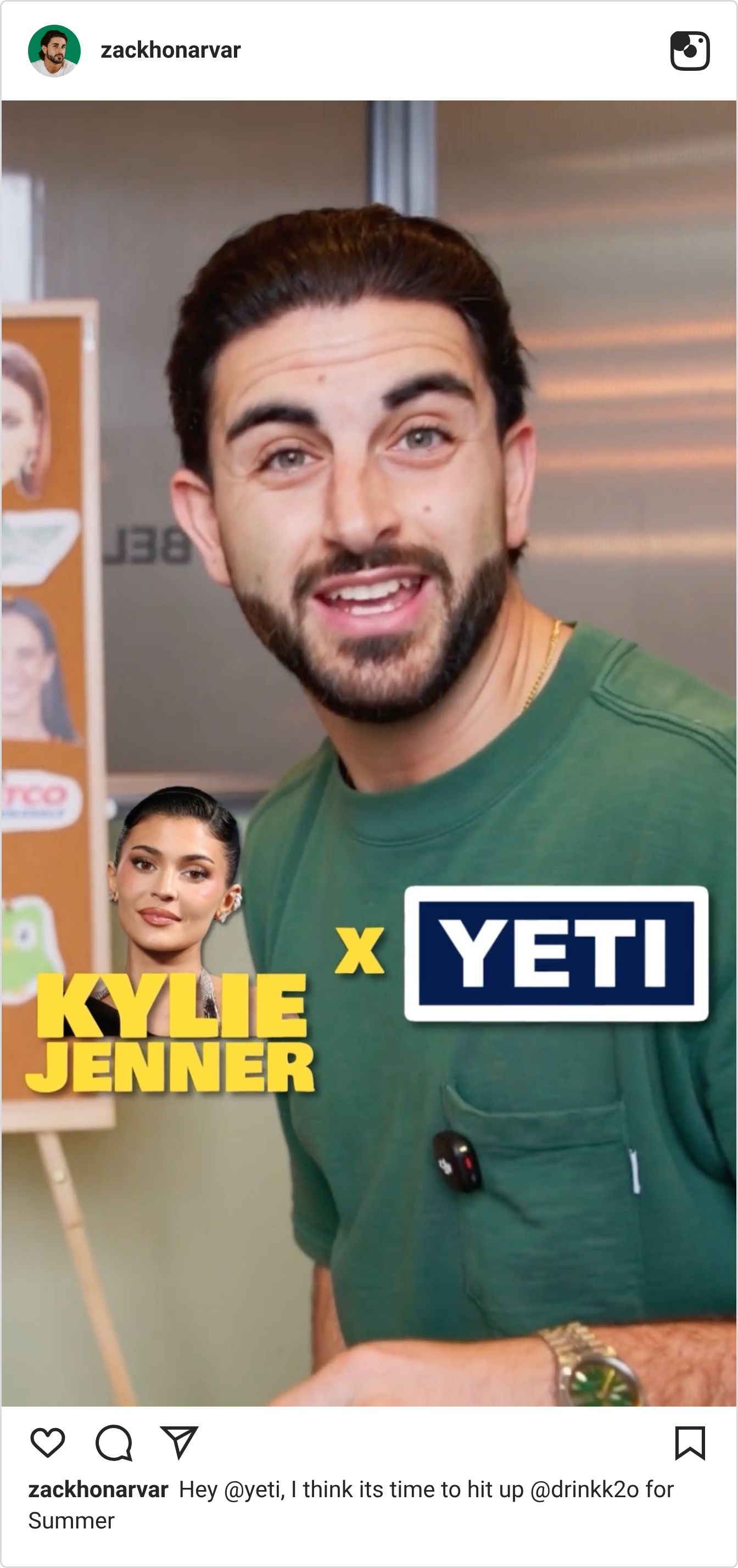
In a recurring Instagram series, he turns his back to a board covered in celebrity faces, lets a dart fly, and pitches a business idea for the person his dart spears. For LeBron James, the pitch involved alternative sponsorships in the wake of his Polymarket deal. For Tom Holland and Christopher Nolan, the pitches involved businesses they could build and own rather than classic lend-your-face partnerships.
Zack’s skills have been honed over a decade building businesses around some of YouTube's biggest creators, especially longtime clients Yes Theory (10.3M YouTube subscribers) and Airrack (19.7M YouTube subscribers).
Originally, Zack didn't set out to work with creators; he wanted to be a music manager. But when he started dabbling, he found an industry that had already written its rules: here's how you market a song; here's how you get a label's attention; here's who you need to know. The path was too well-trodden.
The creator economy had yet to build that infrastructure, and for an entrepreneur with a sharp sales background like Zack (he was one of the first 10 sales reps at Shopify), that freedom was a huge draw. Here was a field he could shape.
"You could do whatever you wanted," he says of those early years. "It was just free rein of creativity."
Back in 2017, when Zack quit Shopify to enter the creator economy full-time, YouTubers were already commanding audiences in the millions, but the entertainment industry was still figuring out how to work with them beyond sponsorships and merchandise.
Zack put a quote on his website that anticipated where the creator economy was headed: "Artists don't need managers, they need CEOs." A successful YouTube channel wasn’t the sole anchor for the business, he knew, but the starting point for several branches.
Yes Theory, a group of YouTubers who had ambitions well beyond making videos, talked about building a movement around their philosophy of seeking discomfort, almost like a secular religion. YouTube was simply how they evangelized.
Zack’s approach to managing them, and later Airrack, looked less like an agent negotiating deals and more like a co-founder helping run the business.
It was a different philosophy from the Hollywood model he saw taking shape around other creators. Some managers represented dozens of clients, occasionally going weeks without speaking to them, only resurfacing when a brand deal came along. Zack thought the arrangement treated talent with less than the respect and attention they deserved. He wanted to be integrated, close enough to the business to help mold and decide what came next.
"Content creation is worldbuilding," Zack tells us. The biggest creators were starting to resemble holding companies, even as much of the entertainment industry continued treating them like individual talent.
In one of Yes Theory’s earlier brand deals, when they were still under 1 million YouTube subscribers, Zack pitched Bumble on a video in which Ammar Kandil, a Yes Theory co-founder, would match with a stranger on the app and invite her on a surprise date to Iceland.
Bumble's team wasn't particularly familiar with YouTube integrations, but agreed to pay $6k. The video has since drawn somewhere over 12.5 million views; Zack estimates a comparable sponsorship would command $60,000 to $100,000 today — 10 to nearly 17 times the original price.

The Good Internet
Today, nearly a decade since Zack went full-time in the creator economy, the industry has developed its own rules, gatekeepers, and preferred ways of doing business.
In some ways, it's starting to resemble the music industry he passed up, and he is now building an ecosystem of companies to capitalize on that maturation.
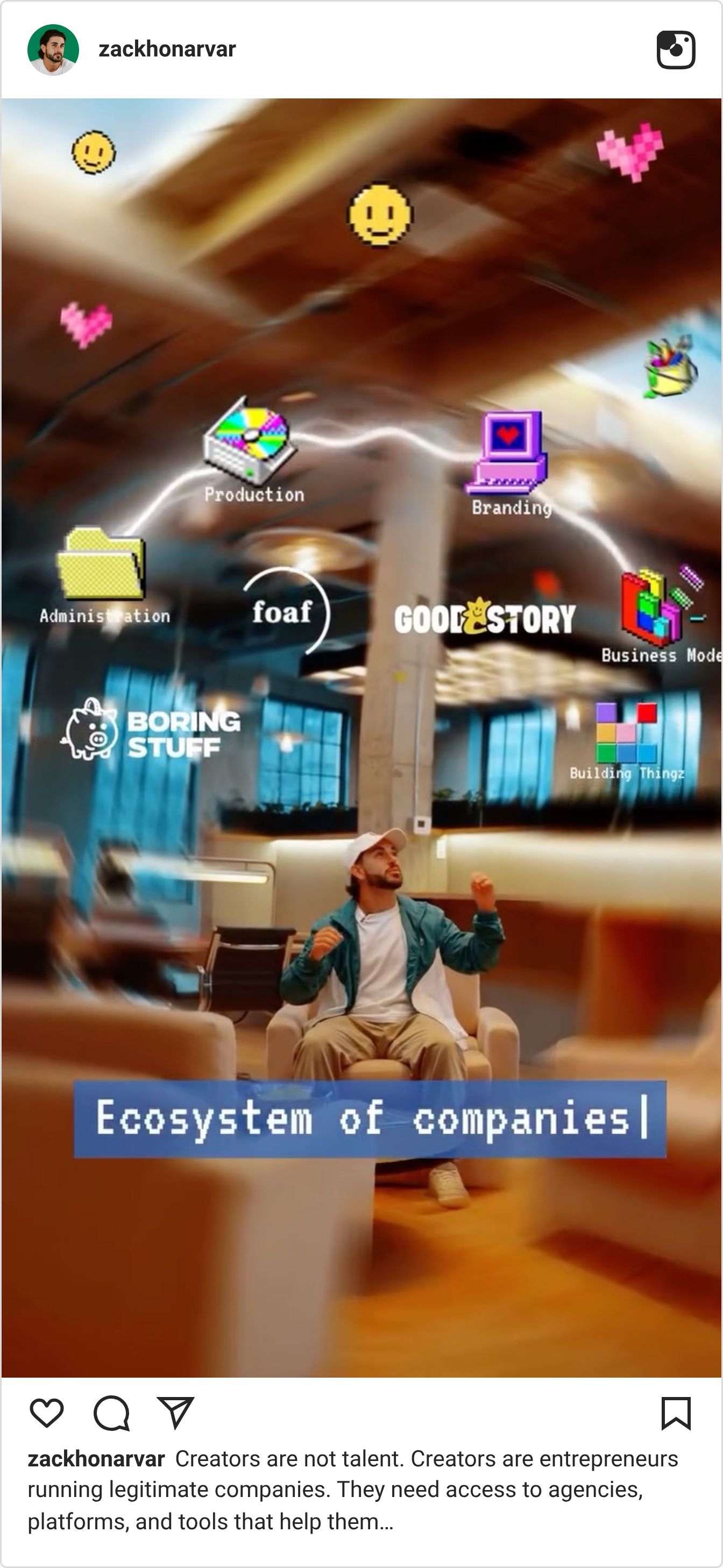
Zack runs The Good Internet, a group of four companies spanning brand partnerships, merchandise, venture development, and accounting.

Good Story: Brand partnerships and creator representation.
Fan of a Fan: Merchandise design, production, and fulfillment.
Building Thingz: A venture studio that helps creators develop, test, and launch businesses.
Boring Stuff: Accounting and bookkeeping services for creators.
The management arm, Good Story, currently works with just 10 creators who collectively have more than 100 million YouTube subscribers.
Roughly 20 corporate staff are employed across the four businesses.
Zack has watched people come in looking for accounting services and return months later for brand partnerships, or vice versa. Some end up working with two or three companies in the group. He has also built and sold businesses along the way, including Wonder House, a fulfillment network inside Fan of a Fan that sold to Selery in 2025.
With Airrack, he co-founded Creator Now, a gamified education platform for aspiring YouTubers. Roughly 10,000 students went through the program before the founders sold to vidIQ in 2024. With more free time, Zack taught himself to edit, got hooked, and began building an audience of his own — now with over 100,000 followers on Instagram.
As the business grew, Zack hired partnership managers and narrowed Good Story's focus to brand deals, dropping the management label altogether. He still maintains that closer, almost co-founder-like relationship with Yes Theory and Airrack, but doesn't expect Good Story to ever work with more than 20 to 25 creators at once.
He jokingly calls it the "anti-management management company."
Zack is picky about which brands his creators work with. He tells prospective clients that if their priority is simply maximizing income, Good Story probably isn't the right fit. He wants to work with people who care about what they're putting into the world and the audiences watching it.
The newest company, Boring Stuff, is also the one he's most bullish on. They already have 70 to 75 creator clients, signing new ones "every single week" with barely any marketing, and have raised no outside money. Not every creator will launch merch or need a manager, Zack says, "but every creator needs to file their taxes."
It's a bet that the next phase of the creator economy will demand something less glamorous than yet another viral video — the infrastructure to run and sustain a business.
Learn more about The Good Internet.
Connect with Zack on Instagram and LinkedIn.
Contribute to our 2026 Monetization Report
Whether you're earning $1,000 or $100,000 as a creator, whether you're working solo or building a team, whether you're thriving or struggling, we’d love to hear from you.
Are you working less and earning more? What’s your primary medium and revenue stream?
Tell us more. Your responses will directly shape the next phase of this research. It’ll take you just five minutes to fill out our survey:


A few notes on making your values operational ✍️
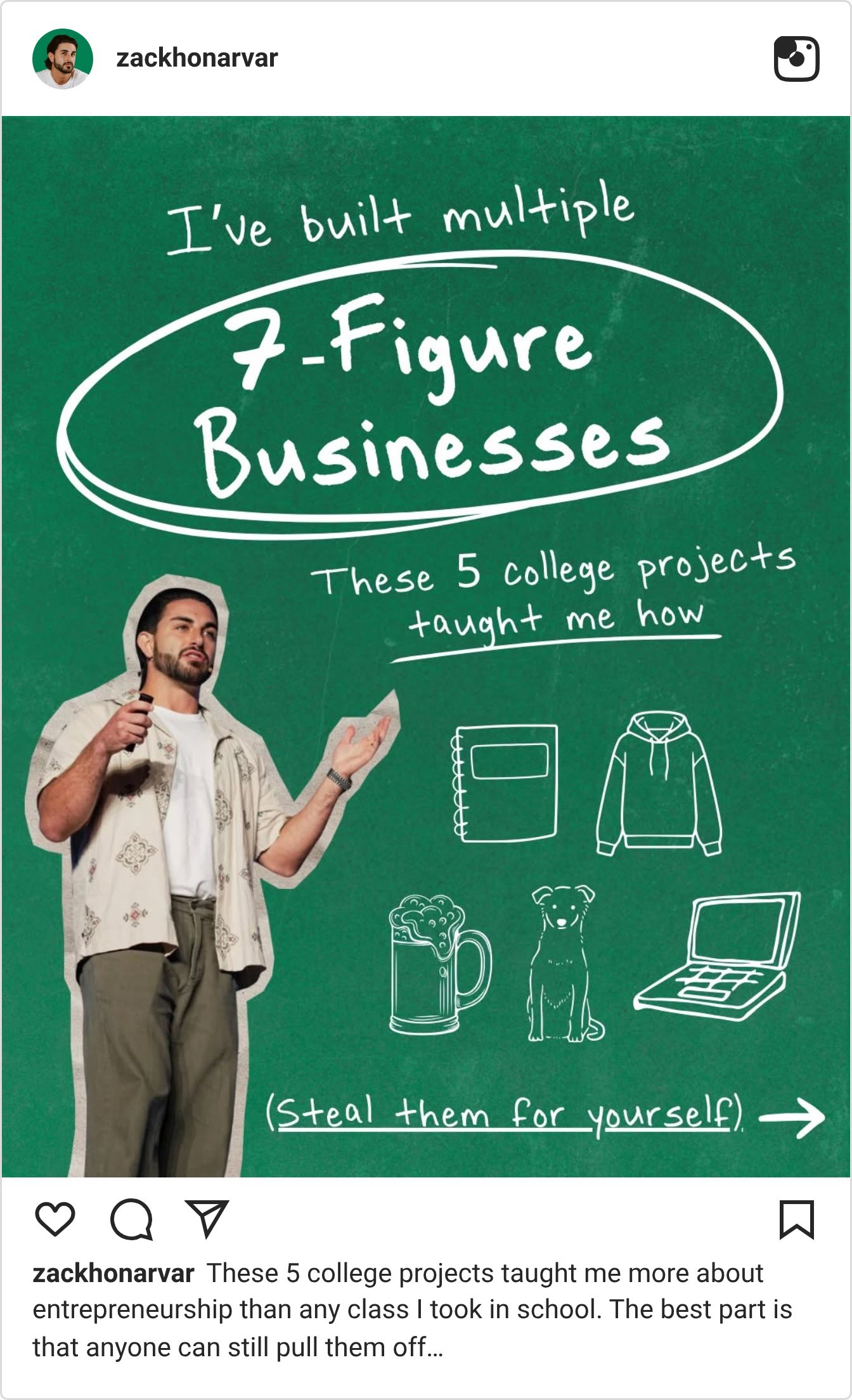
A creator’s values and principles should exist as more than public statements on their websites and platforms — they should influence which clients they work with, which deals they pursue, and how the business runs overall.
Understand your influence on your audience
One of Zack's questions for prospective clients is how much responsibility they feel toward their audiences. He's often disappointed by the answers, particularly from creators reaching millions of people, many of them young.
He points to Yes Theory, whose fans have stopped co-founder Ammar Kandil on the street to say the channel inspired them to attend film school or start businesses. That influence exists whether a creator intends it or not, and Zack wants to work with people who have thought about what they're encouraging their audiences to do. Those ambitions should inform the partnerships they pursue.
If it’s only about money, he tells them, there are easier ways to make a living that don’t cost you your anonymity.
Set the foundation before the offer arrives
Joon Lee, former Creator Spotlight guest and the first journalist Zack has represented, doesn't accept sponsorships from sports-betting or prediction-market companies like DraftKings, FanDuel, and Polymarket.
Zack says that position was part of what attracted him to Joon.
A creator's stated values are also useful information for the people selling on their behalf. A clear boundary keeps the team from spending time courting advertisers whose money the creator won't accept, no matter how attractive the offer.
Audit the deals you’ve already made
Recently, Zack was criticizing LeBron James and Rick Rubin for gambling and prediction-market endorsements when he realized Good Story had facilitated roughly two such deals itself.
"I'm actually a hypocrite here," he recalls thinking. He couldn't credibly question why wealthy celebrities needed gambling money while his own company was collecting commissions from the same industry. He needed to hold himself up to the same principles.
Good Story now strongly discourages gambling and prediction-market sponsorships, but creators retain the final say. Those who take the deals anyway pay a higher commission, which Good Story donates to charities addressing gambling addiction.
The policy doesn’t eliminate the possibility of a gambling deal, but it does eliminate the company’s financial incentive to pursue one. He expected some resistance from clients; instead, they shared how this reinforced their decision to sign with Good Story.
