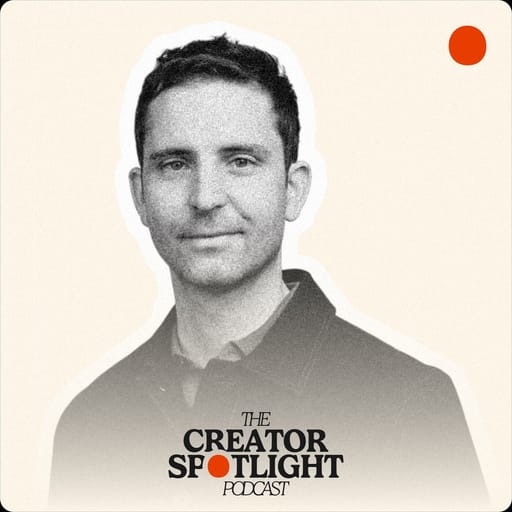
Transcript 0:00 Welcome back to the Creator Spotlight podcast. 0:02 My name is Francis Zierer, and on this show, I speak to creators and folks who work around the creator economy about the craft and business of being a creator, and what that even means. 0:12 Today, we're speaking with Jesse Feister, executive director of the Webby Media Group. 0:17 Jesse recently joined the organization after spending four years at Twitch, where he was the global head of creator marketing for three years. 0:25 I should say I'm speaking to Jesse on Friday, April 10th, but this episode will be released on Tuesday, April 22nd, the same day the winners of the 29th Webby Awards will be announced. Jesse, thank you for being here. 0:39 Francis, thank you for having me. It's, it's a pleasure. Um, okay. So you started at the Webby group pretty recently, I think just a couple months ago. What is your mandate coming in? What is your remit? So yeah. 0:51 I'm, I'm about three and a half months in. I started in January, so still, still sort of learning a lot. It's a, it's a iconic brand. It's been around-- we're on our 29th year. 1:02 Uh, so I have a lot to learn, but I also didn't come in sorta cold. I knew the Webbys really well, had been following the, the Webbys m- almost my entire career. 1:10 Was involved with a Webby-nominated project about five years ago. It did not win, but was nominated, so I had that taste of- I was honored last year- I w- So I feel you. [laughs] Yeah. You know the feeling. Um, 1:21 so f-for me, really the, the mandate is at a high level ushering the Webbys into the next era, right? Like, it's, it's a brand that has been very important to how the internet, I, I think has evolved. 1:36 B- you know, we've always been supporting innovation and creativity as the internet evolves, and as formats and ideas sorta come to market. 1:44 We're usually ahead of the curve in sort of embracing and accepting and recognizing these sorta new ways of creating, usually before the traditional, you know, players might, might get behind them. Mm. 1:59 Um, an example that I just heard recently, but it's a good sort of example of sorta how the Webbys step into the, the space. 2:07 I mean, it's not that long ago where it was actually, like, very controversial for Jimmy Fallon to be putting content on YouTube. Yeah. Right? 2:17 I'm sure it was, like, a huge deal for NBC and how they talked about it, and, you know, the Webbys jumped on immediately, like, this is sort of, like, how it's gonna be. We need to be recognizing these formats. 2:28 Um, and so Jimmy Fallon was, like, I think Person of the Year that year in, in part because of sort of how he was able to jump in and take what he did into the internet earlier than what-- than a lot of people. Mm-hmm. 2:40 Um, blogs, newsletters, I mean, these are all sort of things that we take for granted now, but there was a time where they just were not considered to be legit. Um- Yeah... 2:49 it was interesting, but it wasn't, like, a real format. 2:52 And so there's always been this space because of the way technology evolves, because of the way the internet sorta brings new ways of connecting with people f-t-to the world q-fast, where there's sort of this space for, um, legitimacy to be built, and I think the Webbys have played a really important role in sort of making sure that these new formats get the credibility they deserve and sort of acts as a bridge to, um, more sort of traditional mainstream entertainment and media communities. 3:20 Yeah. So- So I, I- Yeah... so I've been, you know, aware of the Webbys probably, probably about 15 years or so when I, when I was going into college and studying digital media. 3:29 Um, I can't recall exactly, but for me it's alw- it always has been this, like, legitimizing body within, within the bounds of the internet. 3:36 Uh, why was this edition, the 29th edition-- I know this predates your joining too, but, um, if you can speak to why this was the right year to create a dedicated group of awards specifically for creators. Yeah. 3:50 So I, again, like, this, I inherited these choices in some ways, but I've completely sup- not only support them, but I think it's a really big part of why I am here- Mm-hmm... is I think the, 4:03 very clearly creators, this sort of format is becoming not just sort of a way to distribute content. 4:11 It's not just like, oh, you can post a video on social media, but the actual format of w- being a creator has sort of reached a peak where it makes sense to sort of define and clarify what excellence is and start to put some, um, ac- you know, some definitions around 4:30 what, what excellence looks like in this space. And I think, um, the pandemic was this moment where it just exploded- Mm... where people really, really quickly figured out how to use the platforms. 4:43 There were people watching, and so a couple years later now, the, the formats are sorta mature enough that it really makes sense for them to be their own distinctive category for the Webbys. 4:52 Again, we've, we've been recognizing creators for years across different categories. We've had, like, social media- Mm-hmm... categories. We have podcast categories, uh, even video and film. 5:04 So it's not like this is, like, a brand new space for us, but we've never really made the distinction of saying, like, this is actually a format that is sorta deserves, deserves its own, um, lane so that the- Mm... 5:16 work that's being done can sorta be judged ala-along the merits of what it, what it's doing, um, what the format itself is now. Yeah. So I, I think, this, this isn't a question, but I think it is worth stating. 5:28 Uh, w-one of my ongoing projects with this series is to define the word creator in a broad sense because I think it has a specific meaning on every given social media platform, right? 5:39 And it originates on YouTube, creators on YouTube. A creator on YouTube is a little different from a creator on Instagram, et cetera. 5:45 Um, I'm interested in, like, what's the connection, what's, what's the broad sense, and I think that the Webbys now have this distinct category. There's a definition there too. 5:56 Um, but to that point, there are eight parent categories in the Webby Awards, uh, including creators now, and I'll read the other seven. 6:04 There's websites and mobile sites, video and filmAdvertising, media and PR, apps and software, social, podcasts, and AI, immersive, and games. 6:16 And so what- what's interesting to me about this is a lot of those other ones are specific types of media which, like, creators have websites. Right. 6:23 They make video, they do social, um, but they're not all, you know, just specific types of media. 6:29 Like advertising, media, and PR is also kind of a more general one which maybe when I see that, maybe that's separate from creators in that that represents, like, organizations doing advertising, media, and PR work as opposed to creators, which are maybe more independent. 6:45 And I'm pretty sure, like a friend of mine has a, um, [sighs] I think it's under the social category, but it might be under advertising, media, and PR. A video nominated, it's currently winning. 6:56 It's like, and within that there's multiple creators. There's Kareem Rahma who does Subway Takes. Yeah. There's The Rizzler. You have Taylor Lorenz who's this kind of creator journalist. You have New York Nico. 7:04 And so this is a company bringing together multiple creators for a, a social media video that is an advertisement. So the categories [laughs] start to get blurry as, as they do- They do, yeah... on the internet. Yeah. 7:16 Um, but I guess my question here is, like, more specifically the thinking behind some of the c- the creator categories were structured. Which I'll give, I'll give you one more thing actually before we get there. 7:26 So there are... It's split into two subcategories. There are the 12 individual creator categories, which are split into genres like comedy, food and drink, and sports. 7:35 And then there are the, there are the 11 creator excellence categories, including best editing, best long-form video, best series. Um, so that for the listeners, kind of a way these are structured. 7:45 But yeah, my question is, is how the Webbys then define creators as opposed to any of these other seven categories. Sure. So I, I think we have a definition that I'll sort of speak to. 7:57 I think we can talk a little more broadly too. Yeah. Um, 'cause it's, it's kind of like it's a word that means everything and nothing. Sure. It can. So the definition is really important. I agree. 8:06 I know that that's, that's like a passion point of yours, but I agree with you. But, um, I think there's a couple ways to look at it. 8:11 So the, our, our definition, um, honoring outstanding content made exclusively for social platforms- Mm... by creators and influencers. So it is a more about the individual- Yeah... 8:25 or at least the, the nature of the individual. 8:27 Granted, there are examples where brands are sort of playing in that space with collectives, but the difference is it's like an individual bringing their work to market sort of unmediated- Mm... 8:38 or as unmediated as possible. Um, I think that that's different from what you see on social, although the lines are certainly blurred. 8:47 Um, but there's a distinct sort of difference now between social media content and what an individual is doing sort of to bring their own creativity directly to an audience through, uh, a platform. 8:59 And again, to your point, it varies depending on the service. Yeah. You could, you have a very different type of creator live streaming versus what you might see in like a, you know, long form on-demand content. 9:11 But ultimately it's about recognizing the individuals, um, and their contributions to bring their own creativity to market and to an audience. Okay. That makes total sense to me. 9:21 And I think of like, you know, the idea that like a, like corporate personhood, right? Like corporations are people. 9:27 This [laughs] this is almost like swinging in the opposite of that, like recognizing that a people, a per- one person can be a company and an organization within and of themselves. 9:36 I think a great example that I've seen covered in a few places recently is Macy Gilliam at- Yeah... um, Morning Brew. Uh, she might even be up for a Webby. 9:44 Uh, but um, she, I understand, recently signed a new contract with Morning Brew where she has been doing work for them for maybe a couple years now, social videos and these series, and she has developed as a personality there. 9:56 Um, but she just signed a new contract with them that her agent negotiated where her compensation increases, and then she also gets a percentage of revenue generated from advertising on these shows, merchandise around them, whatever. 10:09 So she's shifting from an employee to a creator because she, she's kind of bearing the burden of, um, 10:16 of, of pushing this thing forward, though she has resources, but she also gets the upside, and I think that's a defin- a definitive thing of a creator, is somebody who like 10:25 i- is, has, you know, if not full- It's, it's, it's their own-... the ownership of the business... yeah, it's their own personal ownership over- Yeah... 10:31 the, the brand, and it's you're bringing yourself to the space in a unique way. And again, like it's going to evolve. Like I don't wanna, um, act as if we've like nailed- No, yeah [laughs]... 10:42 the definition and it's not gonna change. Um, I think this is our attempt at sort of putting some structure around it. We're, we're keeping a really close eye on what comes through. Are we, 10:52 are we sort of like a- appropriately sh- structuring these awards? Is there somewhere that we should change? We change the awards- Mm-hmm... 10:58 every year to kind of reflect, um, the feedback that we get from the community- The internet's always changing... and sort of how the space, it changes. So- Yeah... um, 11:06 but I do think that there's just become a distinct difference between what used to be social content and what now is much more around an individual sort of entrepreneurial contribution to that content and how their own s- self-expression is sort of being not just brought to the creativity, but it's like essential to what- Yeah... 11:23 is actually ending up, um, being consumed. Hey, if you're enjoying this conversation, consider subscribing to the podcast. We release a new episode every Tuesday. All right, back to the show. 11:35 Uh, so I wanna move to, to your background for a little while. So you have, you have early roots as a musician, and then you go to Wharton, you get an MBA. 11:43 Uh, and we'll, we'll go back as far as that in a little bit, but I'm more interested in your most recent role, which was at Twitch. Sure. 11:50 As I, as I referred to at the beginning, you were the global head of creator marketing for three years, and you were at Twitch for four years total. 11:57 I believe right before that you were in charge of, of music marketing in particular. 12:02 Um, tell me about that switch from like music marketing specifically into starting to think about creators and formally working on the creator economy.So I came to the, the pan- it was all, all about the pandemic. 12:16 Mm-hmm. I think the, the, the pandemic will be this, like critical moment- You joined Twitch, like, right around the start of the pandemic. Right, right, right at the start of the pandemic. Yeah. 12:22 And there was this influx of musicians who were all at home and needed a way to sorta connect with their, um, fan bases, and streaming was such an obvious, uh, thing for musicians to do. 12:35 And it was a very, still is an early format. 12:37 Like, you can of, of course stream yourself performing, but there's a lot more to live streaming than just, like playing at a concert that's all about interaction and community and, and, you know, ac- having a back and forth with chat is really- Mm-hmm... 12:50 the, the core piece of Twitch. 12:53 So I came initially to help the music category grow, to help kinda bring the musicians who were already on Twitch into sort of, um, a space where they could grow on Twitch and get the most from it. 13:05 And it was a explosive time. It was awesome to see. We brought everybody in the world streamed on Twitch over the course of that couple years. Um, some of it really retained. 13:15 Some of, some people went back out on tour when the world opened up and used Twitch maybe intermittently. 13:21 Um, but what I sort of realized when I came into Twitch, and I knew, I knew a little bit about, um, gaming and live streaming, but I was really, my expertise was in music. 13:29 Um, but to your point, my experience as a musician, I, I did the DIY musician thing for years, like 10 years. We'll get into it, I hope. You were signed to labels, yeah. 13:37 Signed to labels, all the different things you can do without getting rich or famous. [laughs] I think I've done every, everything as a musician. Well, that's how you get an MBA. 13:44 [laughs] Yeah, eventually you're like, "Okay, I gotta, I gotta get my life together." Yeah. But, um, 13:49 the thing that I was most, I would say, I was pleasantly surprised at Twitch to see the kinda core creator, and I really, really re- it re- resonated with me, that entrepreneurial creator. Yeah. 14:03 I said, I may not understand every single game on Twitch, but what I do get is that these are people who are creative, and they have a dream of sort of like getting into, uh, their own world, and they're gonna just get up every day and work hard and sorta stream and grind, and try to take themselves from where they are today to, like, whatever their dream is. 14:24 Yeah. And I just got that. I was like, "That makes sense to me." If nothing else, if, if- Pull themselves up by their guitar strings... this, yeah, it, it's very similar to go- we're gonna go out and book shows. 14:32 Like, for me, it was the MySpace era. Mm-hmm. 14:34 And I just really connected with the, the grind of what these Twitch streamers were going after, and how important it was to their identity, and how it's just, like, a really, really important, um, experience for people to have. 14:45 So I think that that sort of allowed me to step into the broader creator role appropriately. Mm-hmm. 14:50 It was like, um, I'm not gonna be the expert on every single game, but it, that's not really what live streaming is about. It's about creators wanting to sort of express themselves in different ways. 15:00 It's a relationship between a person and, and chat. Yeah, and, and connect with a, connect with an audience. Mm-hmm. 15:04 Um, and I s- I think for me it was, more than anything, it was that, that journey of sort of, that entrepreneurial journey, and I really framed a lot of my work as, in creator marketing around that. 15:14 Like, how do we help, um, people who are really going after careers in the creator economy get the support they need, um, understand what they're up against, but also what the opportunities are, uh, in appropriate ways, and ultimately monetize, uh, to the extent that they can make a living, right? 15:29 That's, that's- Yeah... always the goal, is like how do you get someone into the place where they can do this full time? [smacks lip] There's a bigger conversation around that, right? Um, is that right for everybody? 15:38 Does that, is that sustainable? For some, certainly, but for, for many it becomes sort of a hobby. And there's all sorts of value in between, right? Mm-hmm. You can get a lot out of the experience. 15:49 Um, but I had a great time working with these live streamers, and I found that I had way more in common than them, than I thought I would, because it was the same grind. I was like- Yeah... "I get it. 15:57 You're, you're, you're going for it," and I love that. So... Uh, okay, there's a lot of threads I wanna get into here. [laughs] Uh, but, but first, I am curious about y- about your background as a musician. 16:07 So I think one, one, um, story I'll, I'll give right before I hand it over to you. I don't know if you're familiar with the musician, YouTuber, creator Andrew Huang, who I interviewed him- Yeah. 16:18 Yeah, I interviewed him about a year ago on the occasion of the publication of his book, Make Your Own Rules, which is kind of a memoir, uh, and a bit of a guide of, like, being a musician on the internet and making a living doing that. 16:28 And he, like 20, 20-plus years ago maybe now, he got his start. Now he's never had a proper job. He was selling his, um, songwriting services on eBay- Yeah... when that was like the only way it would make sense to do it. 16:40 He gets on YouTube. He, he grows there over the years, et cetera. 16:43 But so while he's doing this and selling his songwriting services on YouTube and, and, you know, he's, he's doing some, some live shows, et cetera, you are hacking it out there, touring, et cetera. 16:53 So tell me, and, and it's the MySpace era. So tell me about- Yes... your experience as a musician and how that kind of grows into, like, you gaining an understanding of business. Yeah. 17:04 So, uh, you know, I grew up in Cincinnati, Ohio, Midwest. Um, very, very much a place where you're not really supposed to go try to be a musician, although there are many great- Yeah... 17:15 creative people that come out of Ohio. It's not really, like, people are like, "Oh, yeah, that's a good idea. You should go try to be a musician." It's the heartland. Um, yeah. Yeah. It's like, "Get, get a real job. 17:22 Do, do something that, that actually works." But the internet was, for me, like the opening, uh, that was not there prior. I was, uh, old enough to, I downloaded Napster when I was 16. 17:35 It was like, "This is a whole new world." 17:37 I got access to all of this music that I never would've had before, and it sorta ended up breaking and reshaping the music industry, and there's an interesting conversation around that. 17:44 But at, at the time I was like, "This is just amazing, and it's free." 17:48 And, um, I, the step right past that was you could start to discover and, and, um, connect with musicians who were making music all over the world pretty quickly. And so 18:00 I think what was formative for me was the idea that you could, instead of just having to go get a record deal and, like, send a demo out, you could put music up on the internet. 18:09 It, it was MySpace, it was PureVolume, and you could just go out and start connecting with fans directly and try to build an audience that way.And we did it, right? To a certain extent. We, I moved to Chicago. 18:20 That was like the, MySpace was in its absolute sort of peak. MySpace had a record label for a, a minute. I was, we were signed there, and then it fell apart. 18:28 So I've been, you know, all the different platforms I came and went to. 18:30 I actually wasn't aware that MySpace had a record label, which is kind of a really interesting, like, early way of, like, a, a social platform making some kind of creator program. Right. 18:38 It w- it was probably one of the early creator programs when you think about it. Yeah. Um, 18:42 but it was very, very sort of formative for me because it wasn't just, like, make music and help have someone m- market you and make you famous, but you have control. Like, you are in the driver's seat. 18:52 The more you do, the s- the smarter you are, um, the more you understand about, um, not just making music, but also- Mm-hmm... all of the other things around that. 19:01 Like, that's actually gonna impact your success trajectory. So it's also hard, right? [laughs] You have a, you have a dream. 19:09 You're up against everyone in the world telling you it's, like, not a good idea, even when it is. Wait, wait, real quick. Sorry to butt in. What, what were you, what was your band? How many people w- was it? 19:17 What, what did you do? So we, we had a... Yes. We had, I was a drummer. Okay. So I had, and I played in a number of different bands, uh, over the years from, like, rockabilly- That's one of those... 19:26 to, to pop punk to- [laughs]... like, radio pop. But, um, the, the experience for me was really all about DIY, uh, building a fan base from, from the ground up. Mm-hmm. 19:37 And the fact that I was not in a big music market, I think forced that upon us. Mm. 19:42 Um, and, you know, I ended up with a record deal, Thileland Records, which was, like, immediately not the right thing, but it felt- [laughs] You know, I was able to go home on Thanksgiving and tell my family that I had a record deal. 19:54 It's a legitimizing force. Right. After like- Mm... five years, I'm like, it's, they don't know what you're doing. They're like, "What are you doing?" Like, "You're on MySpace. Like, you have fans? 20:00 We don't know what this means." But something about having a record deal, everyone was like, "Oh, you've done it." I'm like, actually, it was the beginning of the end because as soon as we signed- Mm... 20:06 the record deal, we were, um, within a year shelved and stuck, and that's a whole different story. But, um, many bands later, um, it was sort of time to move on. 20:17 Um, I actually got, I didn't go straight back to business school. I actually jumped into, uh, the startup ecosystem in Nashville- Yeah... 20:23 which was small, but there was a lot of overlap with the creative community, and I kinda got, uh, into a startup. 20:29 I got a sense of how people build products, and then I launched a music company with some friends, um, around basically accessing unrecorded music in the, in the cloud. It was like that time. Mm. 20:41 Spotify came to market, everybody had music on hard drives, and all of a sudden, anyone who had, like, 10 years of unreleased music needed to have that music accessible to them in the cloud, and so we built a, a, a platform around that idea, eventually used by a bunch of the different music companies, um, around the world, and we had a small exit. 21:01 Um, and anyway, I stayed in music for, for years- Yeah... years past that. But it was always about the internet, um, allowing new ways of doing things. Um- Yeah... whether it was files, 21:11 you know, being able to collaborate faster, um, to Spotify bringing all sorts of new ways of getting music and reaching fans, um- So, okay, so I wanna talk about the, um, the general artist to business pipeline. 21:25 You, I know this is something you're passionate about. 21:27 You co-authored, uh, a piece on this in the Harvard Business Review last year where, um, it, it was you and two others, and I don't know, collectively, you interviewed 150 people who started their lives in creative careers before joining the traditional labor market, and you identify three skills that are very valuable to be translated from creative work to business work, which are a growth mindset, a bias for innovative action, and intrinsic motivation. 21:52 So tell me more about this, like, this jump and h- how you've seen it work for other people. Yeah. Your theories of it. So I, I think that I... 22:01 So I ended up in, working in all sorts of startups and business and sort of, I always felt that everything I'd ever done as a creator, as a musician, was, like, directly related to me doing anything in the world. 22:13 I felt it so strongly that those experiences were, like, who I was and why I was able to, like, get stuff done and why I was, you know, motivated in the way that I was, but it was almost impossible to explain that to someone else. 22:25 They're like, if you're not, if you don't have that experience, you're like, "Well, wait, does, how does being a musician have anything to do with you being a startup founder- A product manager. Yeah [laughs]... 22:32 or a product person?" And so, um, I realized I wasn't alone. 22:37 I, I met a friend, the person I co-authored the paper with, who had studied at Berklee School of Music, and he had gone into something completely outside of entertainment. 22:45 He worked in health- healthcare innovation, and he was like, "Dude, if you think I, you have a problem telling people what you do, then imagine me. 22:51 I'm with doctors and, and financiers all day, and they just can't, they don't take what I've done seriously at all." Um, and yet we both felt that this was really core to how we were able to succeed as professionals. 23:02 So we thought it was interesting. We found a professor at Wharton who had tried to be in a band for a while as well, and he's like, "I get it. I, I can help you structure this, uh, research." 23:12 And we went out and found, um, 150 people who had sort of similar backgrounds. And again, like, I would, being at, in the creator economy, my, I think the insight was, look, we were musicians. 23:24 This has always been a thing. You grind, you figure yourself out, and those experiences can be really valuable in professional settings if you, if you sorta know how to bring them to the table the right way. 23:33 But- Wait, so wait. Uh, allow me to give you another of my theories for a second. So it's something I've been workshopping, this kind of horseshoe theory of, of agency. 23:41 So at the, in the middle of the horseshoe, right, low agency, you're not doing much. On the opposite ends, on one side is, like, the DIY artist, the punk, the, the, the, the techno DJs throwing warehouse raves, right? 23:54 And then on, on the other end of the spectrum, you have the people starting tech startups, et cetera. Um, you know, the kind of you can just do things tech startup- Right... culture versus DIY music and art culture. 24:05 And I think if I'm, again, I'm still workshopping this, but if there's a difference, like, either way you go from the center, you're getting higher agency. 24:13 But one side is maybe more, like, art and, like, social focus, and the other side is more, like...... commerce, profit-focused. 24:22 And again, maybe, maybe flawed and just, you know, it's, it's a spectrum, whatever, but what you're kind of talking about is, like, how people jump the horseshoe- Right, right... or like the space- Yeah... 24:30 between the ends of the horseshoe. A- absolutely. Um, and so big picture, there was a lot of people doing this for years. The, the creator, the creator economy is new, but the creative sort of experience is not. 24:45 But now you're gonna have 10, 100 times more people who had this experience that we had, and our, our insight was like, "Let's go figure out what works," because there's gonna be a lot of people who decide at some point that for whatever reason they wanna do something else with their lives, even if they've been really successful. 25:00 There's gonna be plenty of creators who don't wanna do at 30 what they wanted to do at, when they were 20, and that's a completely reasonable sort of way to evolve. 25:10 But you're gonna need to make sense of your experience and be able to bring that into the next phase of your career. And we had struggled with it. It's not just like, "Oh, I know how to do things." 25:19 You also have an identity crisis 'cause you thought you were a musician, but now you're in another setting. So we went back and talked to 150 people who had comparable experiences across the arts, right? 25:29 It wasn't just musicians. It was everyone from, um, artists to filmmakers to really anyone who you might fit the definition of, like, a creator, entrepreneurial creator. 25:39 And we talked, we analyzed their professional experience and talked to them about how they thought they succeeded. These are now CEOs, product managers, people who are sort of established professionally. 25:52 And those, to your point, the, we found a couple common, common themes. What did you fi- figure out through your creator experience? 26:00 What did you develop that then you've been able to bring with you to your professional life? 26:05 And all of them, interestingly, not a single per- everyone says, "This is why I succeeded, because I had this early experience, because I really figured myself out and developed these entrepreneurial skills. 26:16 Like, that is why I was able to sort of be where I am today." And they also were like, "Yeah, I never can explain it to anyone." So we're like, all right, we're onto something because, uh, people, pe- we're not alone. 26:25 And it's the, you know, you said pursuit of a personal vision. Mm-hmm. It starts there. 26:32 Most people have this for- most of the people we spoke to had this sort of, like, moment in their life where they're like, "I am going to do this. 26:39 I have a creative calling, and I'm gonna go out and start to take the sort of entrepreneurial steps necessary to make this happen." 26:45 To, as we talked about earlier, I'm gonna bring my own creative work to market in some way that's not just, uh, I have more, more, uh, agency over the process. Mm-hmm. And learning through practice was the other one. 26:57 Most people figure skills, they're able to kind of pick up new skills because you have to, right? Yeah. You probably know how to edit videos now just because you're like, "I want to get my ideas out into the world." 27:07 Exactly. And that's like a, that's a mind, that is a mindset around skill-developing, skill development that not everybody has because not everybody has to figure it out that way. 27:16 Um, and then finally there was this idea of identity and work. People really, as, as a creator, you really, um, identify with what you're doing in a way that's like you're intrinsically motivated. And so 27:28 those, those sort of values translated into business speak pretty, pretty neatly- Mm-hmm... where you ended up having, you know, a bias for innovative action. Well, that's basically just pursuit of a personal vision. 27:42 Like- Yeah... it's just a different ver- it's a different language- It's a different language for the same thing... for the same thing. Yeah. Mm-hmm. 27:47 Um, learning through practice is really about a growth mindset, buzzword in the corporate community. Growth mindset, we all want growth mindsets. 27:53 Well, every creator in the world has one because they have to figure out how- You gotta find your audience... you gotta figure out how to do it, right? Yeah. 27:59 [laughs] You gotta figure out how to do the things you need to do to make it happen. And then identity and work is really just intrinsic motivation. And so we were like, "This is beautiful." 28:07 All of these things that we f- kind of couldn't articulate are, like, famous business buzzwords that every company in the world is seeks, is seeking. Yeah. Every company would say- On the values list, yeah... 28:17 we are looking for a bias for innovative action, growth mindset. It's like literally out of the job descriptions that you read everywhere, and we're like, "Well, this is what you learn as a creator. 28:25 You become this person." Mm-hmm. But the language isn't necessarily there for everyone. 28:30 So the goal of this sort of research and this, this work is to help give creative creators, creative entrepreneurs a language to talk about their experience so that when they do decide to, if, if and when they do decide to sort of evolve, that they can have continuity in that experience. 28:46 It's not like, "I did this thing and now I do something else." Well, you're always gonna have yourself, and you're gonna bring yourself to whatever you do. Yeah. 28:52 And that experience you build as a creator is, in my experience, core to everything else you're gonna do, but you need to be able to explain it to people. I totally agree. 29:01 It, it's, it's just a language thing, and it's not... Like, you just have to understand some of these [laughs] these business l- lingo terms. We're like, everyone's writing books on these ideas, but, like- [laughs]... 29:10 we're down here i- in, you know, and grinding it out and actually learning it the hard way. Yeah. Like, let's get some credit for- And that's what matters... for it. So it's, it's been awesome to put it out. 29:18 We had so much, uh, inbound, um, response from people saying like, "This is me. I never had the, I never had the language." 29:25 There's also an important aspect around the i- the identity crisis because I think it's really common. Yeah. At least for me, it's like, am, I was a musician. Like, that is everything I was. 29:34 Like, I defined myself as a music person, and that's like how I sort of, the story I told myself was that. And I think that many creators are the same way. 29:42 You're like, "I've sort of defined myself around the work that I do." Yeah. 29:46 Um, and the unlock, I think, from what we found and what I've found is it's not that your work is who you are, but y- you bring yourself to your work. 29:55 So as long as you define yourself as sort of below the work you're doing, you can bring that same self to a lot of different domains and still be sort of authentic. Yeah. Um, it's not that I'm a musician. 30:05 I'm just a person that likes to make things and do things and- To engage in the world... yeah. Mm-hmm. And so I can do that in, in various different ways. 30:11 So I can express myself in different, uh, areas of life and still be the same person, and that, that was sort of an un- unlock that we found as well. Yeah. No. I, I love that. 30:20 Um, w- were there any people, whether, whether of those 150 people you spoke to or maybe when you were at Twitch and, and, and working with creators, um, like particular... 30:30 creator business models, which I say that and I'm like, "Well, what is a creator business model?" 30:34 I guess it's somebody who has we- you know, who's, who's producing and distributing digital media as a core part of their work. 30:40 But any specific creator business models you've seen that are really strong or sustainable or su- They don't have to be like, you know, this person's making millions, but like- Right... 30:49 this person's making a sustainable living. I think there are co- a d- couple different levels to it. Mm-hmm. 30:54 Um, when you're smaller, if you're just getting started or if like that kind of like niche, niche, niche stage, um, I think what's really different now than maybe, uh, 10 or 15 years ago was the capacity to sort of monetize a small community- Mm... 31:09 is just fundamentally different. Like Patreon didn't exist. Twitch was very much about individual- Patreon also something founded by a musician who- Right, right, by a musician. He, he- Yeah, exactly... 31:18 Jack is a great example of a, uh, creative entrepreneur. I'm sure he would, you know, he, he definitely fits that mold. Yeah. 31:24 And, um, so I think monetizing a community early and building, getting, b- being able to sort of keep a core group of people really, really, um, engaged and using the monetization tools that are now available to sort of sustain that- Mm-hmm... 31:40 is available now in a way that it wasn't 10 years ago. I think that that's great. I think it also requires a lot of work. 31:46 It's sort of this like ongoing grind that you have to sustain to keep the monetization happening, but it's also there. It didn't used to be, right? Yeah. 31:53 You, you could have a big audience b- or a sustained audience, but what are you gonna, how are you gonna monetize them? 31:57 For us as musicians it's like, well, maybe we can sell them T-shirts every month, but like you can't sell a T-shirt every month. Fan clubs- How were you making money when you were a musician? 32:04 Was it, was it the label fees and, and merch and touring, just that? It, it was almost all touring. Yeah. And it's not a ton of money, but, um, we- How big was the band too? 32:13 How many, [laughs] how many- Yeah, so it's getting-... was playing, right? Well, it went from five to four, so it got a little bit easier. 32:18 [laughs] Um, but you know, like we would, you'd play shows, um, where you'd get paid, certain shows you'd get paid more. You'd just sort of figure out how to make it work. Um, 32:27 and then you would sell CDs and like, uh, we sold downloads. It was just like a really messy time. It was like- Yeah... no one real- no one was making any money in music. 32:33 It was probably the actual dip of the music industry. Yeah, well, maybe the worst time. [laughs] The, the historic dip actually like is like exactly when I was right in the middle of it as a musician. 32:41 But, um, so I think like monetizing a small community, that's something I saw at Twitch that I was sort of fascinated by. You have a lot of people who are not famous, they're not huge- Mm.... 32:50 they're, they're working really hard and they have, they're doing something really well, but they were able to monetize through subscriptions and, um, just creating sort of ongoing content that delivers. 33:00 I mean, like Substack's another version of that. Yeah. There's, that's now a thing now that didn't used to exist. 33:04 But it's, it's got this grind associated with it that I think a lot of people, uh, I believe it will be hard for many people to sustain that forever. 33:12 So the second, you know, th- thing, trend that I've seen, which is a little bit trickier, but I think as you grow and what I've seen that's really interesting 33:20 is being able to sort of take the insights from your audience because you're so intimately sort of aware of your, what you're doing and who the people that you're serving care about, what their needs are, all the things you might wanna know about a, like a, a m- market, you can really understand products or services that would fit that, uh, that audience particularly well. 33:39 Mm. 33:40 And the, the jump out of the, the hamster wheel is to figure out how to build a product, service or, or brand that uses those insights that you are uniquely able to glean because you know that audience so well, but then build a product that you can sort of step out of. 33:55 So I'm gonna kickstart this product with my audience, and my insights are gonna be the core for, for like building it. Okay, wait, wait. So this is, this is something I wanna jump in on. Yeah. So I've been... 34:04 Another idea I've been workshopping. Yeah. 34:05 The idea that the creator economy is not necessarily a distinct industry as such, but a term we will in 20 to 30 years use to refer to this disruptive era where, like you said, when you were, you know, working as a musician, it was maybe the worst time because this was when these, so many institutions were really starting to crumble, and ways of working and ways of, of doing business were changing because of the internet, right? 34:29 Um, whereas now over the past decade or so, these new ways of, of working and engaging with audiences and making money through the internet have, have been forming. 34:37 Um, but I think even as a bunch of legacy businesses kind of struggle or crumble or, or shutter or adapt, um, these new businesses are, are growing. Like you, MrBeast is always a classic example, right? 34:50 But I think like in, over the next 20, 30 years, r- really even, even much shorter, over the next five to 10 years, a lot of these new media businesses will form, will formalize, will grow large, will have h- hundreds to thousands of employees, whatever. 35:04 Yeah. 35:04 Um, and it's like, I, I wonder if, you know, the, the way, the ease of entry into digital media is going to kind of, it's gonna be harder again, or if it will be a continual disruption and that's what the creator economy is. 35:18 But yeah, my, my theory is maybe that like we are in a period right now that will not last forever, that is just a reshuffling of power that like in 20, 30 years again, it might have crystallized and be harder to enter again. 35:32 I, I think that's, that's probably true, and also two things can be true at the same time. So a, a book I would recommend is, uh, The Master Switch. Tim Wu is a, um, a professor at Columbia. 35:43 He worked at, in sort of like internet policy for the Biden administration. Yeah. 35:46 But he, it just puts the whole internet into context of like all the other media cycles and how there's always this like magical moment where a new technology comes to market. 35:56 It's this like explosion of u- utopian creativity and anything's possible, and then eventually the cycle is such time after time that there's consolidation that sort of eventually becomes monopoly, and then it just starts over again. 36:08 Yeah. So I, I b- I think that that's a really, uh, real thing, and it's already probably happening. But at the same time, it's not that it's gonna go back to normal, right? No. 36:17 You're gonna have a new structure that will evolve from where we are today. Um, and I do think it's kinda what I was getting, that's kinda what I think where I was going and what you were kind of picking up on is 36:30 building brands and products is gonna really change. Yeah. 36:32 Because you have the insight of the audienceAt your fingertips in a small way, you can, you can basically test through feedback cycles what works quickly and cheaply, and then scale it if it's good. 36:45 And the, the key is that, like stepping away from the-the-the hamster wheel. Yeah. 36:49 So the brand needs to then q- be able to sort of take a life of its own, and that's what you see with MrBeast or even like Skims or Prime. They had, have all sorts of issues with the Pause, but Ohio, so- Yeah. 37:00 [laughs] But you know what I mean. 37:01 Those, those are like you walk into, to CVS, and there's just now a product that you've heard of, you don't really necessarily know where it started, but how it started is very, very different than how it would have 10 years ago. 37:12 So I do think that that's, that's like a, a trend that's not going away. Yeah. But I, I agree with you at the same time that, um, it's, it's a cyclical evolution, and consolidation is inevitable. 37:22 Well, this is also, uh... I mean, Slow Ventures just launched, uh- Right... 37:25 like a month or two ago now, a $60 million creator fund where like I, uh, maybe I'm misunderstanding some of it, but as I understand it, they are just looking to invest in, um, in product companies started by creators. 37:37 And, like the innovation there is simply that these creators have these large built-in audiences, so the theory is it's, it'll be easier to stand up a new business- It's the kickstart, yeah... 37:46 because they have this distribution and loyalty. The kickstart. Yeah. Yeah. I-I think what's missing in that is also, is the insight, the audience insight too. Mm-hmm. 37:53 So it is, it's not just, it's not just, oh, you have dist- you have, like an audience, therefore you can sell them something. Um, you know what to sell them because you are- What the desires are. Yeah. 38:02 You, you are- Yeah... like intimately aware of what that community or what that, like, part of the market really, really needs and cares about, and that is a unique new, um, reality that, that is... 38:11 You know, you do market research. You have people- Yeah... 38:13 who spend time trying to figure this out scientifically, or you have someone who just lives it and breathes it and knows everything about this community so intimately that they just know what, uh, products are gonna work. 38:24 It's priced in. Right. It... And so I think the, I think you're gonna see a lot more of that. 38:28 I think that that's fundamentally different way of, of product development, but I also think that eventually it just be- there's a point where the brands just reach mainstream, um, you know, penetration, and people are just like, "Well, I just got this energy drink. 38:42 I don't really know who's behind it, but now it's here, and I've heard of it." Yeah. I just saw it next to- Yeah... next to Gatorade- Right... or whatever. 38:47 Um, okay, something about the new technology bit too you were, you were talking about a second ago. You recently wrote a piece about AI and creativity. 38:54 Uh, something I took away from that, that I've been thinking about is that, you know, there's all the fear-mongering about AI taking creative jobs, but you don't see so much about, like, well, creative entrepreneurs, creators can actually be empowered to, like, not need as many maybe business consultants or strategists- Right... 39:11 to help them do it. 39:12 Like, there's not much talk about, like flipping that and, like AI, like actually empowering creatives, creators by, by, by giving them the knowl- like, you know, democratizing creativity, whatever, let's say. Yeah. 39:24 Yeah. But what it does do is democratize business strategy and ex- and, like the ability to execute, like a marketing plan, right? Right. A-and, and the ability to... 39:33 I mean, again, like you, there's different ways to look at it. So people are afraid, uh, AI is going to sort of replace creativity, which I don't believe. I think that if anything it's- Just makes it more valuable... 39:42 it, it makes it more valuable. However, um, ask a creator if they do stuff that they don't like doing. Yeah. 39:48 And you're gonna have, like a litany of, of things that are really tedious and, and not really the core value, and there's a lot of low-hanging fruit to just use AI. 39:58 Like, from what I can see, is just, like a lot of things are gonna probably become easier- Yeah... to do, which is good. 40:03 Um, and that also means that more people are gonna be able to participate in the system because it just takes less, uh, effort to actually enter it. But you're still competing on your core creativity. 40:13 Like, what do you have to bring to the table at your core? Like, can you connect with another human being? Can you connect with multiple human beings? I do not think that AI disintermediates that. 40:22 I think if anything, it's just, it- it's more likely to get down to the competition based on- Mm-hmm... the best sort of creativity, not- Well, I think, I think it goes back to agency. Yeah. 40:31 And, like if you, if you're in the middle of that agency horseshoe and you're not gonna do much, like, you know, I'm very aware of this- Right... and that AI- There's your horse- your horseshoe. It's, it's a good one. 40:38 I, I, um- Thank you. Yeah. I'm still working shop- workshopping it. Yeah. But, uh, but no, so like, you know, if you... 40:44 I'm, I'm very well aware that, like a lot of what I put out is this, like advice that, you know, asking creators, "How did you do this? How did you d- how did you do that?" 40:51 Whatever, and people aren't always willing to share. They're not always willing to give up, like the tactic they used to make this video go viral, whatever. 40:57 Um, but I'm always like, I think they're misunderstanding what the, the giving away the sauce 'cause the sauce isn't necessarily the tactic, it's- Mm-hmm... it's the agency. Yeah. And that's the barrier. 41:08 The, like that's the thing is maybe AI can put people who are more high agency much further ahead and leave the lower agency- Yeah... people in the dust. And that is, that is definitely disruptive. Mm-hmm. 41:20 But it's, it's not something to fear if you value creative judgment- Yeah... and you think that that's, like your core asset. 41:25 If you, if creative judgment is what you think is what is driving value, and it's, it's what I think really matters personally, then the technology just becomes a means to an end to do it more effectively. 41:36 Of course it will change. Of course- Yeah... 41:38 it's not gonna look the same that it looked, as it looked five years ago, but creative judgment is about connecting with other people, and I think that that insight is, like timeless and is just not gonna be replaced by technology. 41:49 However, if you do something that doesn't require creative judgment, and that's a really big part of how you make a living, um, it is a risk, right? Yeah. 41:56 So I do understand the fear, but I still think that it's better to have more people being able to use their creative judgment to create value in the world because that's, that's what value is. I love that, yeah. 42:08 Um, okay, going back to the creator economy a little bit. So there are increasingly a number of bus- of businesses built around creators. Not creators themselves, but strategists, managers, agents. 42:19 We were just talking about the, the VC side of it. 42:21 Um, in as much as you are across this industry, where do you think are the, the most underserved areas or the biggest opportunities for, like, uh, new businesses or services to pop up? It's a good, it's a good question. 42:34 Um, I'm gonna say some that come to mind, I'm sure if others will come to mind later. 42:38 But the one that I, I think that the tediousness ofThe creative process and, like, just the pure amount of effort that goes into creating, managing, and tracking content is... And I worked... 42:50 I, I saw this in music, so I, I think I've- Yeah... built, built products around these problems. It's- Creative operations. Yeah. I used to work at a company where we made a product for that. Yeah. 42:57 It's still, it's still a pain. It's not that easy, right? It still takes a lot of tedious effort. And so I, I see that, I think, maybe just as someone who's l- been in it. 43:07 I'm like, "Man, it, I don't want to do those things. I wanna focus on being creative or doing something that really matters and use my judgment." So I look to that first. Like, I would love for it to be... 43:16 The easier it becomes to sort of manage, um, the creative process, I think that's, uh, always gonna be valuable. Um- Project managers- Project managers... to have on staff. Yeah. 43:26 I, I think the, like, f- financing and funding of creative, creativity and creators is interesting. I think it's also kind of misunderstood- Mm-hmm... in the sense that I, um... Your 43:38 music is, is us- sometimes used as, like, an analogy. Like, oh, well, there's record labels. Maybe there should be creator some sort of, like, equivalent model. But there's a really difference... 43:48 There's a pretty big difference in what IP is sort of generated. And with music, like, y- the rights, the, the music, the song, the songs or recordings themselves sort of live on. 43:59 Whereas for a lot of creator content, while there is IP that sort of lives out in the, uh, world, I think it's a little more ephemeral and the, like, the value of that content over time is less clear. 44:09 Maybe that'll change. So I think when people think about, oh, we should just give record label models to, um... which is a terrible idea to begin with, 'cause, like, have we ever seen how bad record labels are? 44:19 Uh, not... I would say record deals can be very bad- Yeah... as, as someone that's, that's lived it. Um- They can be prisons... it's, it's also a fundamentally different sort of investment. 44:28 So, like, you have to continue to grind- Mm-hmm... for that investment to pay off, and you're, like, investing in a person that you don't know where they're gonna be in 5 or 10 years. 44:36 I just don't think it's healthy to, like, lock people in to something where they have to keep doing the same thing over and over again. So I don't know. 44:43 I th- I think that financing of creators will evolve, but I think it's, um... 44:48 And I think there's opportunities there, but I also think it's delicate, and it's gonna require people to really understand, um, actually what it is to be a creator. Yeah. So I'm really curious. I'm not... 44:58 I don't know much about the state of music creators. Like I mentioned, I, I interviewed Andrew Huang last year. I [laughs] interviewed another guy called Andrew Southworth, who... 45:04 He helps people, like, w- marketing their music and, you know, getting, cracking Spotify charts, et cetera. But I'm not really up on the state of music creators. But I'm curious, the Jesse of 20 years ago- Yeah... 45:16 if, if you, if you were 20 years younger and you were trying to hack it as a musician, where would you start? What would you be doing to, to find success? 45:24 I think the biggest change, and this is not just for music, but this is what I, uh, think is settled now in a way that wasn't settled, the, the access to feedback cycles- Mm... is just, like, fundamentally different. 45:38 Like, you can put something out and immediately get a sense of whether it's resonating or not, and that as a musician in, uh, you know, 45:46 20- 8, 2010, 2012, you would, like, sit and just, like, argue o- over whether the, like, well, people are gonna like this, or they're not gonna like it. 45:53 [laughs] And, like, you could spend, like, months and months before you put anything out, and then you, you kinda were committed to it, whereas now, and I, it... This is what's happening in music. 46:01 Like, people are really able to put music out quickly and get a sense of whether it's reacting or not. Mm. And they're... 46:07 That's amazing because it really gives you a directionally insight onto, like, is this gonna work or not? But it also, like, kinda risks the intuition, the artist's intuition. And so I don't have... 46:17 There's no easy- Mm... answer for how to make choices like this. But I think you have to take the market feedback into consideration. You have to take advantage of the fact that you can get, 46:27 uh, insights as to whether what you're doing is working. 46:29 But if you have an artistic point of view and you feel very strongly that this is true, um, the best music in the world sometimes takes time to reach the right audience, and you can't take market feedback as, like, a binary good or not, but you also can't ignore it. 46:45 So- Yeah... I would be spending a lot of time trying to understand what was reacting, but I'd also probably still be having similar arguments with my bandmates about whether it was really good or not. Um- That's... 46:54 Well, that's such a good point, like the decisiveness, and this goes back to what we were talking about with, like, um, AI and creatives and creativity, where it's like you still need to know. 47:02 You have to have the decision-making. You have to know when to say no to a thing, when to say yes. You have to have a good judgment for what's good, what's not. 47:08 And I think about, like, 10 years ago, I think it was when the, the Kanye West album Life of Pablo came out, and he was, like, updating songs live. Yeah. 47:14 And then with Charli XCX last year, she, like, all of her last past albums now, the album art has been updated- Yeah... with the same style as Brat. And, like, you can now, like, reverse pretty much any... 47:25 I mean, [laughs] maybe not any, but so many of these decisions that you make creatively. And that, you know, that brings its own... Like, we can argue for [laughs] another hour whether- Right... that's a good thing. 47:34 It doesn't really matter. It's what the reality is now. It's, it's, is, is what it is. Yeah. Yeah. So it's, um... Yeah, so I... The, the feedback cycle is real. Market feedback is valuable. 47:46 Um, you can't let it get in the way of your intuition. I wish there was an easy roa- roadmap for how to make that decision, but if there was- Yeah... you know, it wouldn't be such a, a esoteric, serious question, so. 47:57 There we go. Uh, for music in particular, I see that as, like, the biggest opportunity. Mm-hmm. Um, and I... And you're seeing it sort of change the music industry pretty much, uh, over the last five years. 48:06 Like, people know if something's working much, much, much more quickly, and that sort of changes the nature of how you build a music career. There you go. Uh, last question. 48:15 I, I'm not sure [laughs] how much you can answer this, but next year is the, the 30th Webby Awards. 48:20 Is there any, anything [laughs] you could r- you can speak to about plans for that or how the creator, uh, category evolves? It's, it's still early. We gotta get through this year. 48:29 [laughs] So, uh, you know, as you know- Yeah... we announce, um, winners April 22nd, which is today- Today if you're listening... in time, in podcast, uh, time. [laughs] And then the, the ceremony itself is on May 12th. 48:41 But I, I think what you can s- what I can say for sure is that we are making a huge, uh... You know, we will be continuing to embrace the creator, um, world in more meaningful ways. 48:53 I don't know exactly what that's gonna look like, but it's, it's a core part of my vision for where the Webbys go, and not just because it's a trend and it's a big deal, because I actually think it's what is- Culturally important... 49:03 it, it is, it's what's changing the internet. Mm. And I also think there's, like, a real opportunity and value to be, um, added. 49:10 So I think that legitimizing people who are not taken seriously, I think maybe because at Twitch I had to ex- people were like, "People game?" [laughs] Like, how is that a thing? 49:18 And, and they're like, no one understood it. And I'm like- Yeah... 49:21 this is a real thing that's impacting the world, and these are actually really, really credible, creative people, um, who are doing something at a, at a, at a very, very high standard. 49:32 So I think that there's just so much room to legitimize these formats still. 49:36 And because the Webbys sort of have this credibility and, um, are respected across the traditional, you know, landscape in, in, in some ways, I think we can really help bring those formats into a s- a place where they're taken more seriously and respected. 49:50 I think everyone acknowledges them, but I don't think everybody actually fully respects what's happening yet. So I'm hoping that we can be a part of that solution. I look forward to seeing it. 49:59 Uh, this has been a great conversation, Jesse. Thank you for coming on. Yeah. Thank you for having me. Yeah. And listener, I will see you next week. This has been the Creator Spotlight podcast. 50:08 [outro music]